Shell from the inside: what five years of numbers say
For a university report I had to assess Shell plc from the inside: its finances, marketing, people and operations over five years, ending with a prioritised list of strengths and weaknesses. This is a summary of what I found.
The short version: Shell is financially strong and very good at one thing in particular. It is also more exposed to the oil price cycle, and less convincing on the energy transition, than its headline numbers suggest.
The financial picture
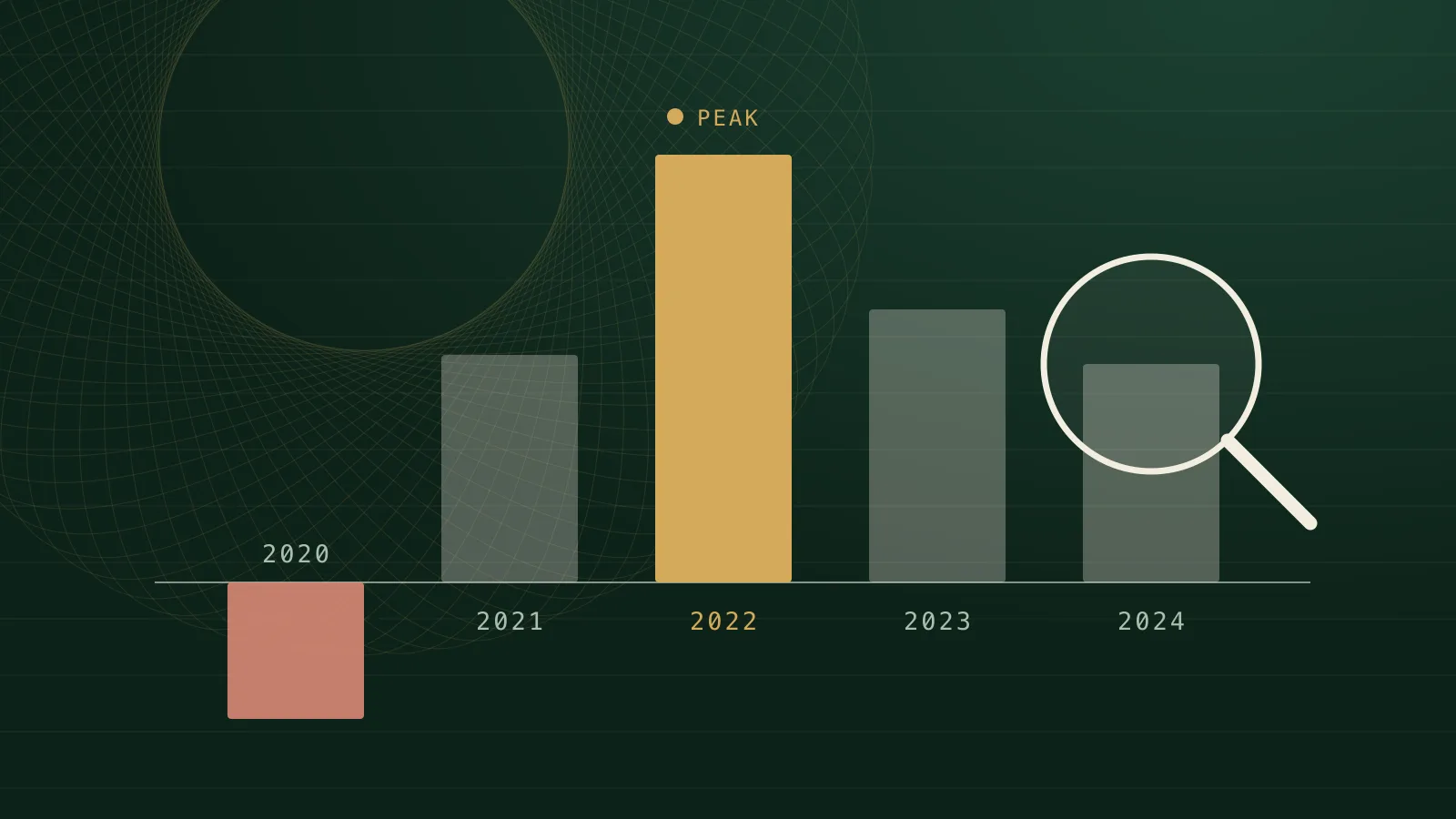
Profitability followed the oil price. Revenue and profit peaked in 2022, when the war in Ukraine pushed prices up sharply, then fell back as markets stabilised and trading margins narrowed. The 2020 loss came from the pandemic price crash. Read together, the net margin over five years says less about management and more about the commodity cycle. That in itself is a weakness: earnings this dependent on price are hard to plan around.
Cash generation is the real strength. Operating cash flow was positive in every one of the five years. That is what has funded rising dividends, share buybacks and a reduction in net debt. The share price roughly doubled over the period.
Liquidity is comfortable. The current ratio stayed above 1 throughout, in line with the industry. The cash ratio fell, but that reflects cash being returned to shareholders rather than any strain.
Efficiency is mixed. Asset turnover of 0.72 in 2024 was above the industry average of 0.65. Inventory turnover was below average, pointing to slower stock movement as demand softened.
One ratio worth watching
The reserve replacement ratio measures whether an oil company is adding proved reserves as fast as it produces them. Below 100% means the reserve base is shrinking. Shell's ratio improved over the period but stayed under that threshold.
For a company still earning most of its money from oil and gas, that is a long-term question about future production, and it sits awkwardly beside a strategy of reducing upstream investment.
Where the money comes from
The segmental analysis was the most revealing part.
- Integrated Gas (mainly LNG) was the most profitable segment across the five years, helped by strong prices and by trading and optimisation.
- Upstream was the second, normalising after the 2022 peak and affected by UK windfall taxes.
- Renewables and Energy Solutions was volatile and, in 2024, loss-making, after a profit the year before.
- Chemicals and Products moved from deep losses in 2020 back to profit.
So the division Shell presents as its future is the one that is not yet earning reliably, and the group depends heavily on gas.
Against competitors, Shell sat between ExxonMobil and BP on revenue, earnings and operating margin. Exxon's lead reflects tighter cost control and a focus on high-return oil and gas projects, which suggests Shell still has room to improve efficiency.
Brand and marketing
Shell ranked first for brand value in its sector across the period, with around 44,000 retail sites worldwide. Using the Boston Matrix, I placed Integrated Gas as the star, upstream and lubricants as cash cows funding investment elsewhere, and renewables as the question mark: a high-growth market where Shell's share is still small.
The weakness is reputation. Repeated greenwashing allegations make the brand more fragile than its ranking implies.
People
This section changed my view of the company more than the ratios did.
Under CEO Wael Sawan, Shell has simplified its leadership structure, pulled back from lower-margin renewables, made LNG central and set a cost-saving target of $3bn. Part of that has come from headcount, including a significant cut to its exploration workforce.
Two things stood out:
- Pay is tied to ESG. A larger share of incentive pay is linked to environmental and social targets than at peers.
- Diversity lags. About two-thirds of the workforce is male, women remain under-represented in technical and trading roles, and ethnic minority representation is limited.
Employee reviews rate culture and work-life balance above BP's, but also point to unclear leadership during repeated restructuring.
Strengths and weaknesses, prioritised
Strengths: financial resilience and cash generation; dominance in integrated gas; global brand and network; leadership aligned behind a clear strategy.
Weaknesses: sensitivity to market prices; a reserve replacement ratio below 100%; weak performance in renewables; diversity gaps; a reputation exposed to greenwashing claims.
What I took from it
The exercise taught me to look for the tension between sections of an annual report. The strategy pages talk about transition; the segment note shows where the profit is. Neither is misleading alone, but the full picture only appears when you put them side by side. The segment note is where I would now start.
Based on a report I wrote during my BA (Hons) Accounting and Finance at the University of Greenwich. Figures are from Shell plc's annual reports for 2020 to 2024 and the sources cited in the original report.