Three years of Coats plc audit reports: where is the climate risk?
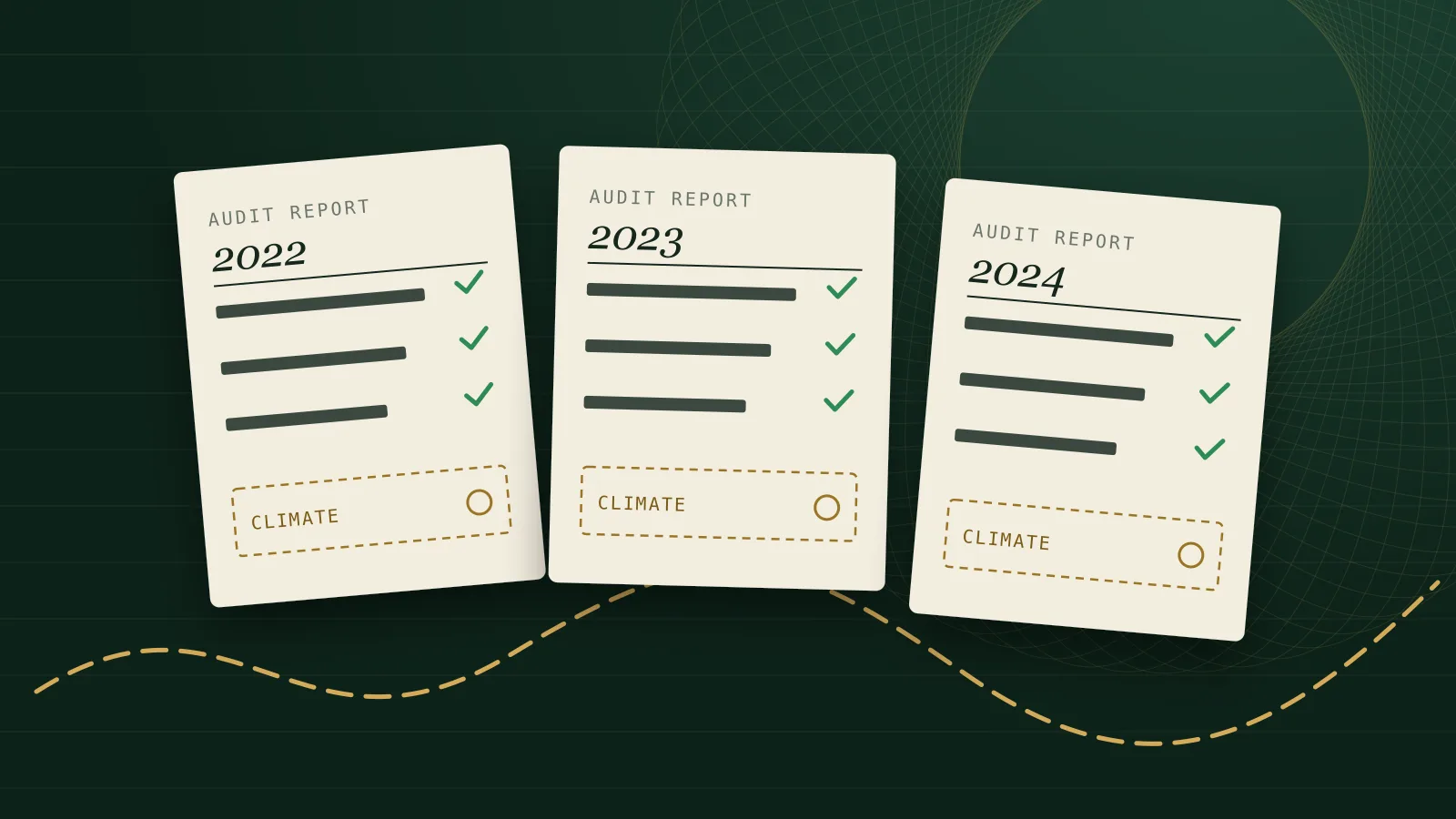
Climate change is now a financial reporting issue, not just an environmental one. It can impair assets, create provisions, change cash flow forecasts and, in the worst case, raise doubts about going concern. So I wanted to see how that plays out in a real set of accounts and, more importantly, in the audit report attached to them.
I chose Coats Group plc, the thread and components manufacturer founded in 1755, and read its annual reports and auditor's reports for 2022, 2023 and 2024.
What management is responsible for
Management has to work out how climate risk affects the company's financial position and make sure that is reflected in the numbers: asset values and useful lives, impairment tests, provisions, and the going concern and viability assessments. Disclosures follow the TCFD framework, with IFRS S2 now asking for Scope 1, 2 and relevant Scope 3 emissions plus scenario analysis.
The auditor's job is to challenge that. Are the climate-related judgements reasonable? Are the assumptions in the forecasts consistent with what the front half of the annual report says about climate? Under ISA (UK) 720 the auditor also has to read the other information and consider whether it is materially inconsistent with the financial statements.
What Coats did
On the company side, the progress over three years is clear.
- 2022: climate recognised as a principal risk; first standalone TCFD report.
- 2023: emissions re-baselined, science-based targets submitted, climate added as a standing item for the group risk committee.
- 2024: reporting aligned with the EU's CSRD, a double materiality assessment, and 74% renewable electricity.
By 2024 Coats reported a 51% fall in Scope 1 and 2 emissions, an 87% cut in waste to landfill, and a target of net zero across its value chain by 2050. It also has a dedicated sustainability committee at board level, and the audit committee reviewed the climate elements of the disclosures and the viability scenarios.
What the auditors did
This is the part I found most interesting.
The auditor changed during the period. Deloitte signed the 2022 report; after its maximum permitted tenure ended, EY was appointed by tender and signed 2023 and 2024. All three opinions were unqualified: true and fair.
Materiality moved too. In 2022 it was set at $9.9m, based on 0.6% of group revenue. In 2023 and 2024 it was $10m and $12m, based on 5% of adjusted profit before tax. Same company, different benchmark, and a reminder that materiality is a judgement, not a formula.
On climate specifically, each year the auditors:
- reviewed management's climate scenarios and disclosures,
- compared them with the assumptions used in impairment and cash flow models,
- considered the effect on useful lives of assets, deferred tax and going concern.
And each year the conclusion was the same: no material impact, and not a Key Audit Matter.
The KAMs that did make the report were the ones you would expect in a group like this: uncertain tax positions, pension obligations, revenue cut-off, and impairment of goodwill and acquired intangibles.
The gap
So there is a contrast. On one side, a company that treats climate as a principal risk and reports real progress against it. On the other, three audit reports where climate is assessed and then set aside as immaterial to the numbers.
I do not think that is a failure by the auditors. A KAM is a matter of most significance to this year's audit, and in each year the auditors found the measurable effect of climate on Coats's numbers to be small. But it does leave a reader with a question. If impairment tests and long-term forecasts do not yet include measurable climate impacts, how would anyone know when they start to matter?
My recommendation in the report was that Coats should build physical and transition risk into its asset valuations, cash flow forecasts and going concern assessments explicitly, rather than relying on high-level statements that the impact is not material.
What I took from it
Two things stayed with me.
First, the audit report tells you as much by what it leaves out as by what it includes. Reading three years side by side, and noticing what never appears, was more useful than reading any single year closely.
Second, sustainability and financial reporting are converging faster than I expected. The same assumptions now have to hold in the TCFD section, the viability statement and the impairment note, and it is the auditor's job to notice when they do not.
Based on a report I wrote during my BA (Hons) Accounting and Finance at the University of Greenwich. Figures are as published in Coats Group plc's annual reports for 2022 to 2024.